How to Choose the Right Scissor Lift: Working Height, Capacity, Power & Jobsite Guide
2026-08-19
Choosing the right scissor lift depends on more than maximum working height. The best machine for a project must also match the required platform capacity, indoor or outdoor working environment, power source, machine width, terrain, and transportation requirements.
For indoor maintenance and warehouse work, an electric scissor lift is often the practical choice because of its compact design and low-emission operation. For construction sites and uneven outdoor terrain, a rough terrain diesel scissor lift may be more suitable because it provides stronger traction, ground clearance, and outdoor performance.
This guide explains how to choose a scissor lift based on the actual requirements of your project, including working height, capacity, power type, platform size, terrain, and total operating cost.
Quick Answer: What Scissor Lift Should You Choose?
Choose a scissor lift based on these six factors:
| Requirement | Recommended Consideration |
|---|---|
| Indoor maintenance | Electric scissor lift |
| Warehouse or facility work | Compact electric scissor lift |
| Outdoor construction | Rough terrain scissor lift |
| Uneven ground | 4WD rough terrain model |
| High working height | High-reach scissor lift |
| Heavy tools and multiple workers | Higher-capacity platform |
| Narrow aisles or doors | Compact and narrow scissor lift |
| Frequent outdoor operation | Diesel or rough terrain model |
The most important rule is simple: do not select a scissor lift based only on its maximum height. Working height, platform capacity, machine dimensions, terrain, and power source must all match the jobsite.
What Is a Scissor Lift?
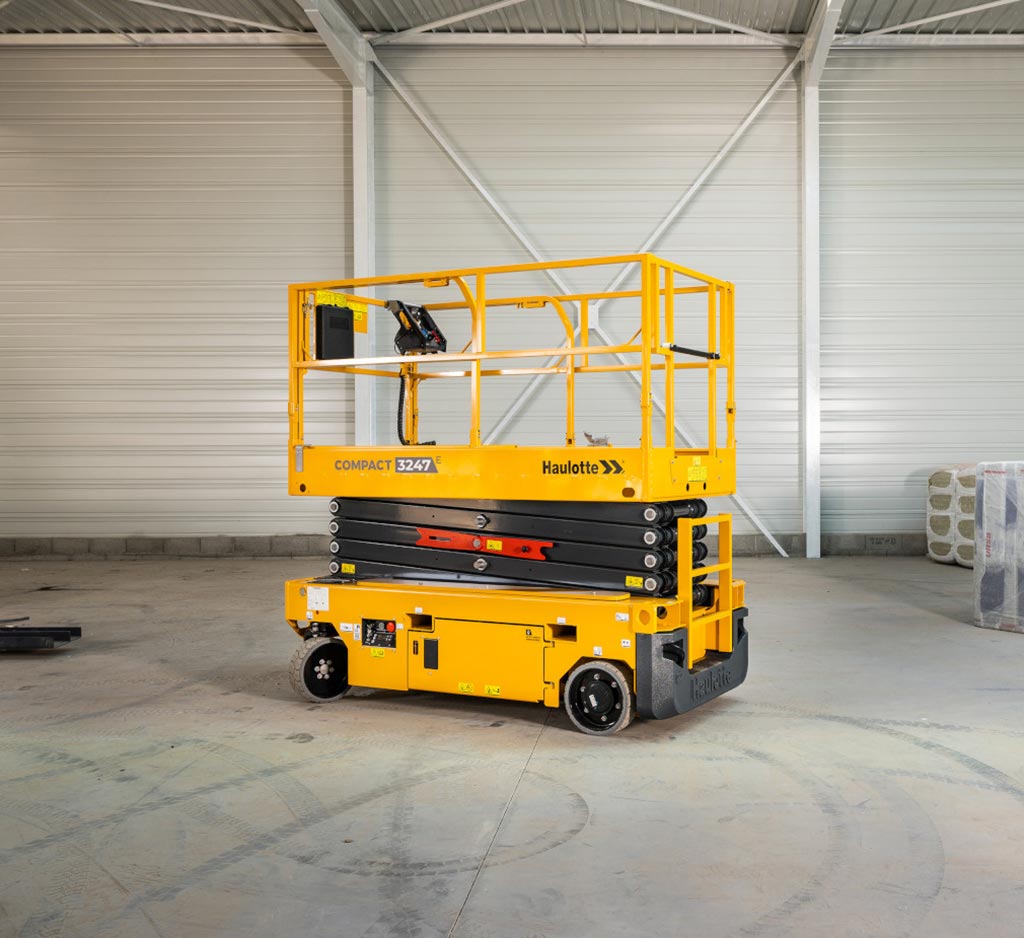
A scissor lift is a type of mobile elevating work platform (MEWP) designed to raise workers and equipment vertically. Unlike a boom lift, which can provide both vertical and horizontal outreach, a scissor lift primarily moves the platform vertically.
The lifting mechanism uses crossed support arms that extend upward, allowing the platform to reach elevated working positions.
Scissor lifts are commonly used for:
- Construction and building installation
- Electrical and mechanical maintenance
- Warehouse operations
- Factory maintenance
- Painting and finishing
- HVAC installation
- Lighting installation
- Facility maintenance
- Indoor fit-out projects
- Outdoor construction
For projects where workers need a stable platform with enough space for tools and materials, a scissor lift can be more practical than a traditional ladder or scaffold.
1. Determine the Required Working Height
Working height is one of the first specifications you should determine.
However, working height and platform height are not exactly the same.
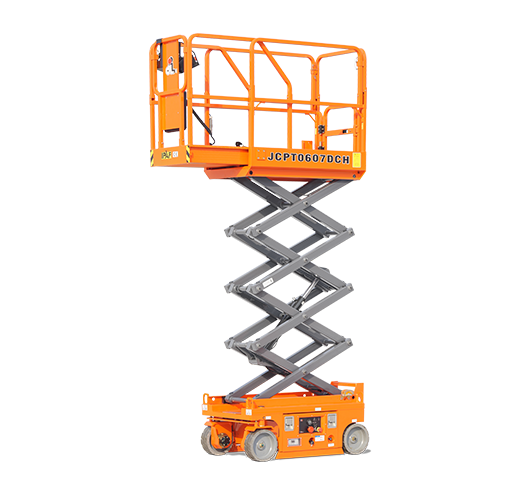
A machine with a certain platform height allows an operator to work above the platform by reaching upward. Therefore, buyers should determine the actual working height required at the jobsite instead of selecting equipment based only on platform elevation.
For example, if workers need to install lighting near a high ceiling, measure the actual height of the work area and then select a machine with sufficient working height and safety margin.
What working height do you need?
Consider:
- Ceiling height
- Installation height
- Building height
- Required operator reach
- Required platform elevation
- Obstacles around the work area
RQ Machines offers scissor lifts with different working heights for indoor and outdoor applications. For example, its current equipment inventory includes compact electric models as well as larger rough-terrain machines.
2. Check the Platform Capacity
Platform capacity determines how much weight the machine can safely carry.
This includes more than the workers themselves.
You should calculate:
Total platform load = workers + tools + materials + equipment
For example, if two workers weigh 80 kg each and bring 100 kg of tools and materials, the required platform capacity should be at least 260 kg, before considering the manufacturer’s operating requirements and applicable safety limits.
Do not select a machine that is only slightly above the calculated load.
When comparing models, check:
- Rated platform capacity
- Extension deck capacity
- Number of operators
- Maximum material load
- Load distribution requirements
For construction projects, higher-capacity scissor lifts can be useful when workers need to carry installation materials, tools, electrical components, or other equipment onto the platform.
3. Choose Electric or Diesel Power
Power source is another major consideration.
Electric Scissor Lifts
Electric scissor lifts are generally well suited to:
- Warehouses
- Shopping centers
- Factories
- Indoor maintenance
- Building interiors
- Electrical installation
- Painting and finishing
Their compact design and lower emissions make them practical for many indoor applications.
Electric models are particularly useful where noise and exhaust emissions need to be minimized.
Diesel Rough Terrain Scissor Lifts
Diesel rough terrain models are designed for more demanding outdoor environments.
They are commonly considered for:
- Construction sites
- Infrastructure projects
- Uneven ground
- Outdoor installation
- Rough terrain
- Sites requiring higher ground clearance
Four-wheel drive and rough-terrain configurations can provide better mobility on challenging surfaces.
For outdoor construction, the key question is not simply “electric or diesel?” Instead, consider the complete operating environment.
4. Consider the Jobsite Terrain
Terrain can dramatically affect which scissor lift is appropriate.
For smooth concrete floors, a compact electric scissor lift may be sufficient.
For uneven construction sites, gravel, dirt, slopes, or rough surfaces, a rough terrain scissor lift is generally more appropriate.
Before purchasing, evaluate:
- Ground condition
- Slope
- Ground clearance
- Tire type
- Four-wheel drive requirements
- Turning radius
- Maximum gradeability
- Outdoor weather conditions
A machine that performs well inside a warehouse may not be appropriate for an outdoor construction site.
5. Check Machine Width and Access Dimensions
A scissor lift may have the required working height and capacity but still be unsuitable if it cannot physically enter the work area.
Always check:
- Overall machine width
- Overall machine height when stowed
- Machine length
- Turning radius
- Door width
- Elevator dimensions
- Warehouse aisle width
- Transport dimensions
For indoor applications, compact and narrow machines can be especially important.
If the equipment must pass through standard doors or operate between warehouse racks, dimensions can be just as important as lifting capacity.
6. Compare Platform Size and Working Space
Platform size affects productivity.
A larger platform can provide more working space for operators, tools, and materials. However, a larger platform also increases the overall machine dimensions.
Ask yourself:
- How many workers will operate on the platform?
- How much equipment must be carried?
- Is a platform extension required?
- How much maneuvering space is available?
- Does the machine need to operate in narrow areas?
For simple maintenance tasks, a compact platform may be sufficient.
For installation work, where workers need tools and materials on the platform, a larger working platform can significantly improve productivity.
7. New vs. Used Scissor Lift: Which Is Better?
The decision between a new and used scissor lift depends on budget, project requirements, operating hours, and expected service life.
New Scissor Lift
A new machine may be preferred when:
- Long-term ownership is planned
- Maximum reliability is required
- The machine will operate frequently
- Specific configurations are required
- Warranty coverage is important
Used Scissor Lift
A used scissor lift can be attractive when:
- Initial investment needs to be reduced
- The machine will be used for a specific project
- A proven model is preferred
- The buyer wants faster access to available equipment
However, used equipment should not be evaluated based only on purchase price.
Before purchasing a used scissor lift, check:
- Manufacturing year
- Operating hours
- Maintenance records
- Hydraulic system
- Battery condition
- Tires
- Platform controls
- Emergency systems
- Structural condition
- Safety inspection records
RQ Machines supplies both new and used aerial work platforms, including equipment from brands such as Genie, JLG, DINGLI, Haulotte, ZOOMLION, LGMG, and XCMG.
8. Genie, JLG, Dingli or Other Brands?
Brand selection is another important consideration when buying a scissor lift.
Genie and JLG are widely recognized aerial work platform brands, while DINGLI and other manufacturers provide additional options across different price points and machine configurations.
Instead of choosing a brand based only on reputation, compare the specific model against your requirements.
Look at:
- Working height
- Platform capacity
- Platform dimensions
- Machine width
- Power source
- Drive system
- Rough terrain capability
- Spare parts availability
- Service support
- Total ownership cost
RQ Machines currently offers scissor lifts and aerial work platforms from multiple major brands, allowing buyers to compare different models according to their project requirements.
9. Don’t Forget Spare Parts and After-Sales Support
Equipment selection should not stop at the purchase order.
Long-term availability of spare parts can have a direct impact on machine downtime and maintenance costs.
Common aerial lift components that may eventually require replacement include:
- Joysticks and control components
- Hydraulic components
- Electrical components
- Circuit boards
- Sensors
- Filters
- Engine components
- Drive components
- Switches
- Cables and connectors
RQ Machines maintains a large aerial lift parts catalog covering equipment from brands including JLG, Genie, DINGLI, and ZOOMLION.
When buying equipment internationally, it is worth asking the supplier whether replacement parts, technical documents, manuals, and maintenance support are available after delivery.
10. What Information Should You Send a Scissor Lift Supplier?
If you want a faster and more accurate quotation, do not simply ask:
“How much is a scissor lift?”
Instead, provide the supplier with the basic project requirements.
A useful inquiry should include:
- Required working height
- Platform capacity
- Indoor or outdoor use
- Ground conditions
- Electric or diesel preference
- Required platform size
- Maximum machine width
- New or used preference
- Preferred brand
- Quantity
- Destination country
- Required delivery time
For example:
We need 2 rough terrain scissor lifts with approximately 14 m working height and at least 300 kg platform capacity for an outdoor construction project. Please provide available models, specifications, photos, price, and shipping cost to our country.
This gives the supplier enough information to recommend suitable models rather than sending a generic product list.
Scissor Lift Selection Checklist
Before purchasing, use this checklist:
- Working height matches the jobsite
- Platform capacity covers workers, tools, and materials
- Machine width fits the access route
- Platform dimensions meet the working requirements
- Power source matches the environment
- Terrain capability matches the jobsite
- Drive configuration is appropriate
- New or used condition fits the budget
- Spare parts are available
- Maintenance support is available
- Transportation requirements have been confirmed
- Total purchase and operating costs have been evaluated
Frequently Asked Questions
What is the main difference between an electric and diesel scissor lift?
Electric scissor lifts are commonly used for indoor and relatively smooth-floor applications, while diesel rough terrain scissor lifts are generally better suited to outdoor construction sites and uneven terrain.
How do I choose the right scissor lift working height?
First determine the actual height of the work area. Then consider the machine’s platform height and rated working height, while maintaining an appropriate operating margin according to the manufacturer’s specifications.
Are scissor lifts suitable for outdoor construction?
Yes. Rough terrain scissor lifts are specifically designed for outdoor applications. Depending on the jobsite, buyers should consider four-wheel drive, ground clearance, gradeability, tires, and platform capacity.
Should I buy a new or used scissor lift?
It depends on your budget, expected operating hours, project duration, and reliability requirements. Used equipment can reduce the initial investment, but its maintenance history, operating hours, structural condition, and safety systems should be carefully inspected.
What information do I need to request a scissor lift quotation?
Provide the required working height, platform capacity, application, terrain, power source, preferred brand, quantity, machine condition, and destination country. More detailed requirements usually result in a more accurate quotation.
Can RQ Machines supply scissor lift spare parts?
Yes. RQ Machines supplies aerial lift parts for equipment from brands including Genie, JLG, DINGLI, and ZOOMLION. Buyers can search by part number or equipment model to identify compatible components.
Conclusion: Choose the Scissor Lift Based on the Job, Not Just the Price
The right scissor lift is the one that matches the complete working environment—not simply the machine with the lowest price or highest lifting height.
Before purchasing, evaluate working height, platform capacity, power source, terrain, machine dimensions, platform size, brand, condition, spare parts availability, and transportation requirements.
If you are still unsure which model fits your application, provide the basic project requirements to RQ Machines. The team can help compare available scissor lift models and provide specifications, pricing, and delivery information.
Looking for a scissor lift for sale? Contact RQ Machines with your required working height, capacity, application, and destination to receive suitable equipment options and a quotation.